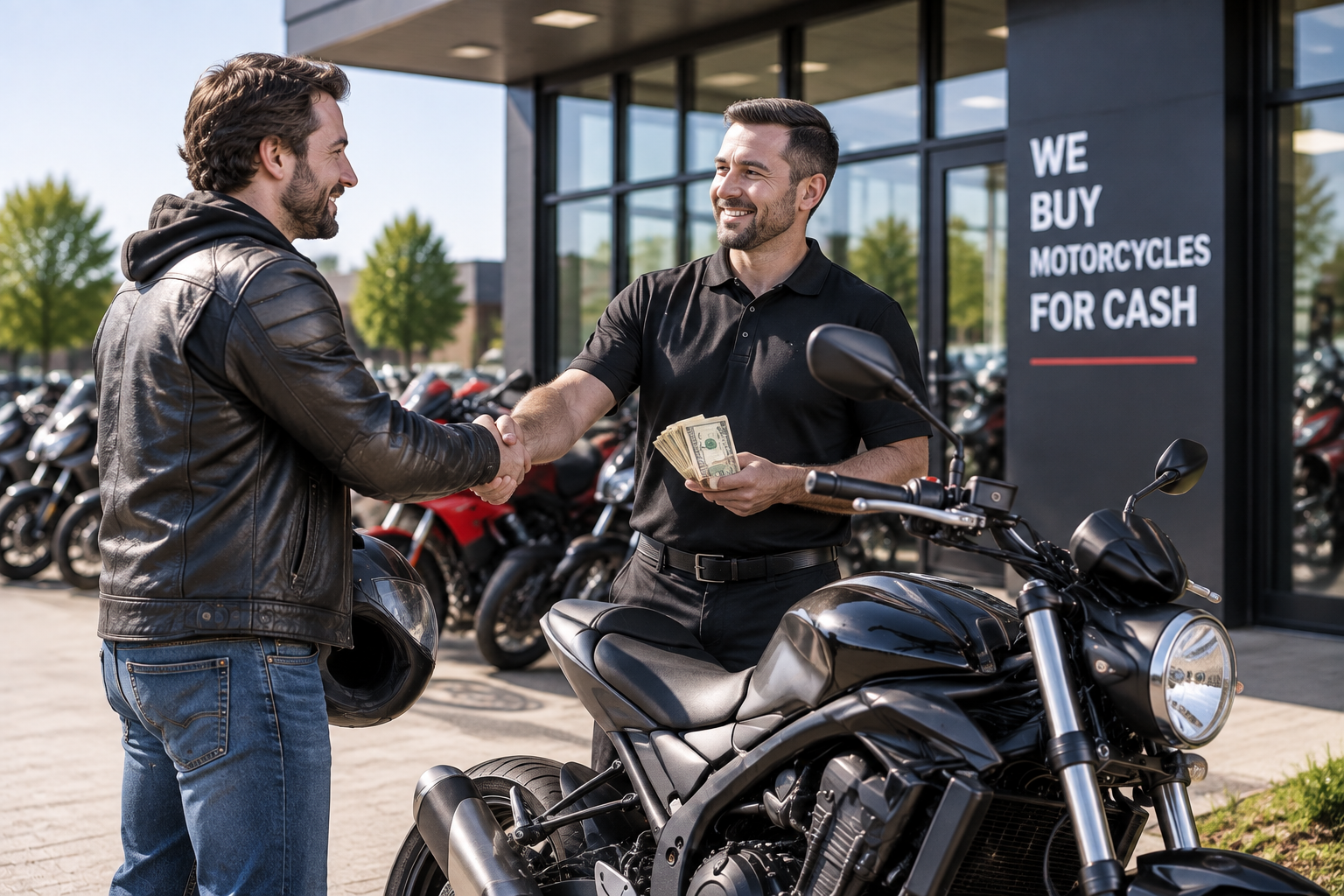
Selling a motorcycle privately sounds simple until you’re three weeks into fielding lowball offers, no-show buyers, and people who want to “test ride it first” with no intention of buying. If you actually need cash — not just an eventual sale — a dealer offering direct cash purchases is almost always faster, safer, and less of a headache than going it alone on Facebook Marketplace or Craigslist.
We buy motorcycles in Fayetteville every week, across nearly every make, model, and condition. Here’s what the process actually looks like, and how to make sure you’re getting a fair number for your bike.
Private Sale vs. Cash Sale to a Dealer
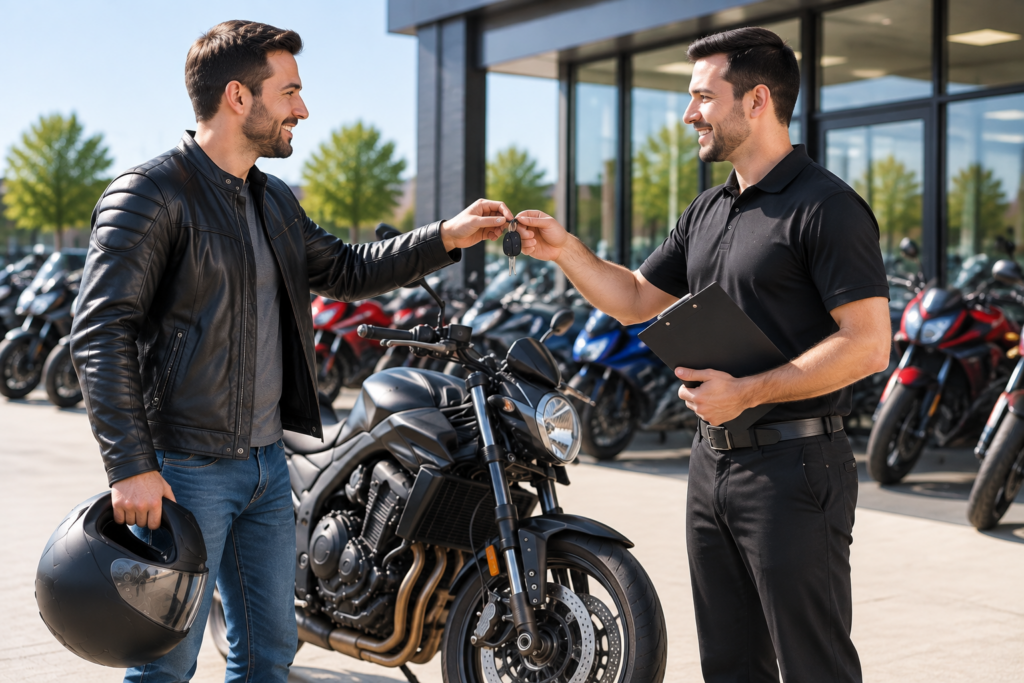
Both routes can work, but they solve different problems.
Selling privately can net a slightly higher price on paper, but it comes with real costs most sellers underestimate:
- Weeks of listing, messaging, and scheduling meetups
- Safety risk meeting strangers to hand over a vehicle worth thousands of dollars
- Buyers who want financing you can’t provide, killing the deal at the last minute
- No protection once the bike changes hands if something was misrepresented
Selling for cash to a dealer trades a small amount of top-line price for speed, safety, and certainty:
- A single in-person appraisal instead of dozens of back-and-forth messages
- Same-day payment in most cases
- No liability once the sale is complete and the title transfers
- No advertising costs, no photos to take, no listing to manage
If your bike has been sitting and you’d rather have cash in hand this week than a maybe-sale in a month, the dealer route usually wins on time value alone.
What Determines Your Motorcycle’s Cash Offer
A fair cash offer isn’t arbitrary — it’s built from a few concrete factors:
- Make, model, and year — some brands and models hold value better than others, and demand shifts by segment (cruisers, sport bikes, dirt bikes)
- Mileage — lower mileage generally means a stronger offer, but well-maintained higher-mileage bikes with full service records can still perform well
- Condition — cosmetic condition matters, but mechanical condition (compression, clutch feel, electrical function) matters more
- Title status — a clean title moves faster and commands a better offer than a salvage or rebuilt title
- Maintenance history — documented service records (oil changes, tire replacements, valve adjustments) give a buyer confidence the bike wasn’t neglected
- Current market demand — even a well-maintained bike in a slow-moving category will price differently than a high-demand model right now
What to Bring When You Sell
Having your paperwork ready speeds up the appraisal and gets you paid faster:
- Title (in your name, or with proper documentation if there’s a lien)
- Valid photo ID matching the name on the title
- Any maintenance or service records you have
- Spare keys or fobs
- Loan payoff information, if there’s an outstanding balance on the bike
If there’s a lien on the bike, that’s not a dealbreaker — it just means the payoff amount gets handled directly as part of the transaction rather than paid separately to you.
The Appraisal Process, Step by Step
A straightforward in-person cash sale typically looks like this:
- Bring the bike in (or in some cases, arrange an off-site evaluation)
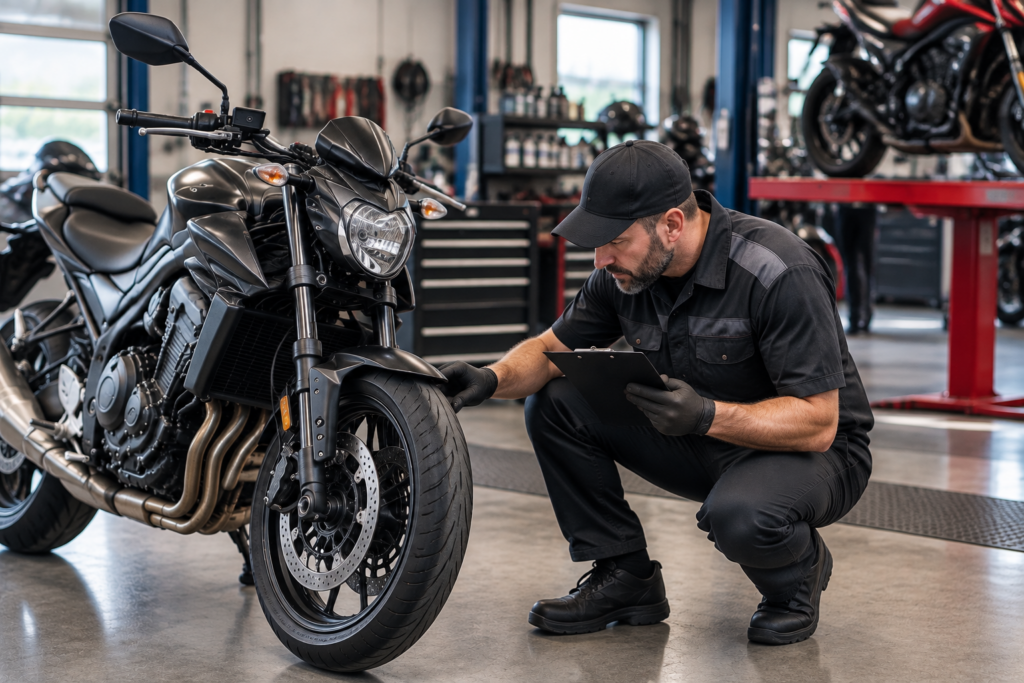
- A technician inspects it — mechanical function, cosmetic condition, mileage verification, and title check
- You receive a cash offer based on that inspection and current market value
- If you accept, paperwork is completed on the spot — title transfer, payoff handling if applicable, and payment issued
Most sellers are in and out within an hour once the bike is on-site, which is a fraction of the time a private sale realistically takes from listing to closed deal.
Tips to Get the Best Offer
A few things genuinely move the needle on your appraisal:
- Clean the bike before you bring it in — first impressions affect appraisal speed and perceived condition
- Fix small, cheap issues — a dead turn signal bulb or a loose mirror costs you more in perceived condition than it costs to fix
- Bring maintenance records — documentation removes guesswork from the appraiser’s side
- Know your payoff amount if you’re still financing the bike, so there are no surprises mid-transaction
- Get the bike running and street-legal if it isn’t currently — non-running bikes can still sell, but expect the offer to reflect the extra work involved
Not Ready to Sell Outright? Consider Consigning It
If you’re not in a rush for immediate cash and want to try for a higher final sale price, consignment is worth considering — the dealer handles the listing, showings, and paperwork, and you get paid once it sells, typically for more than a direct cash offer but with less certainty on timing. Our consignment program is worth asking about if timeline flexibility matters more to you than an immediate payout.
Sell It, Trade It, or Both
If you’re planning to ride away on something new, a trade-in often makes more financial sense than selling outright and buying separately, since the trade value can reduce your out-the-door cost directly. Browse our current motorcycle inventory if you’re considering an upgrade alongside your sale, or check out our financing options if you’re rolling a trade into a new purchase.
Ready to Get a Cash Offer?
Whether you’re selling outright, trading toward something new, or exploring consignment, bringing your bike in for an in-person appraisal is the fastest way to know exactly what it’s worth. Stop by our Fayetteville, NC location, or reach out through our contact page to get the process started.