Motorcycle Riding for Mental Health: How Two Wheels Can Help You Find Peace in a Chaotic World
Motorcycle Riding for Mental Health is about something far more meaningful than horsepower, speed, or the motorcycle parked in your garage. It’s about freedom, focus, emotional release, and the feeling of leaving life’s pressures behind for a little while.
Life can be overwhelming.
Work gets stressful. Bills pile up. Relationships become complicated. Anxiety makes your thoughts race. Depression can make even simple things feel exhausting.
Sometimes it feels like your mind never shuts off.
Then you put on your helmet.
Start your motorcycle.
Feel the engine come alive beneath you.
And head down an open road.
Suddenly, your attention shifts.
The noise of everyday life becomes quieter.
You’re thinking about the road, the next corner, the changing scenery, and the experience of riding.
For many motorcyclists, this is why riding means so much more than transportation.
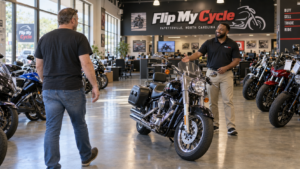
At Flip My Cycle in Fayetteville, North Carolina, we understand that motorcycles can represent freedom, community, confidence, and personal happiness.
But can riding actually help with stress, anxiety, and depression?
Let’s explore ten ways motorcycles may support emotional well-being, what the research suggests, and why so many riders describe their motorcycle as their favorite way to clear their heads.
Important: Motorcycle riding can be a rewarding wellness activity, but it is not a proven treatment or replacement for professional mental-health care. People experiencing depression or anxiety should continue recommended treatment and seek support when needed.
Table of Contents
- Motorcycle Riding for Mental Health and Stress Relief
- How Riding Encourages Mindfulness
- Motorcycle Riding and Anxiety
- Can Riding Help With Depression?
- The Freedom of the Open Road
- Building Confidence and Self-Esteem
- Motorcycle Riding and Social Connection
- Getting Outside and Changing Your Environment
- Creating a Healthy Personal Routine
- Finding Purpose Through Riding
- What Research Says About Motorcycle Riding
- How to Ride Safely When Feeling Stressed
- Motorcycle Riding Around Fayetteville NC
- Why Flip My Cycle Supports the Riding Community
- Final Thoughts
1. Motorcycle Riding for Mental Health and Stress Relief
Stress affects nearly everyone.
Deadlines, financial responsibilities, family obligations, and everyday pressures can leave people feeling mentally exhausted.
Motorcycle riding may provide a welcome break from these demands.
Unlike driving a car, operating a motorcycle requires active attention.
You monitor traffic.
You look through corners.
You manage throttle and braking inputs.
You anticipate changing road conditions.
Because riding demands concentration, it can temporarily redirect attention away from repetitive worries.
For some riders, that change in focus feels refreshing.
Instead of replaying an argument or worrying about tomorrow’s responsibilities, you’re concentrating on the present moment.
A peaceful ride may leave you feeling more relaxed and emotionally refreshed.
That doesn’t mean the problems disappear.
It means you may return with a clearer perspective.
2. How Motorcycle Riding Encourages Mindfulness
Mindfulness involves paying attention to the present moment.
And motorcycle riding naturally demands awareness.
You notice the temperature.
The wind.
The road surface.
The movement of the motorcycle.
The sounds around you.
The scenery passing by.
Your attention becomes focused on what is happening right now.
Many riders describe this experience as being completely absorbed in the ride.
Some compare it to a form of moving meditation.
That comparison describes the subjective experience rather than a clinical equivalence to meditation.
Still, the feeling can be meaningful.
When you’re fully engaged in an enjoyable activity, there may be less room for repetitive, stressful thoughts.
For some riders, even a short, peaceful trip can feel like a mental reset.
3. Motorcycle Riding and Anxiety: Finding Calm Through Focus
Anxiety can make ordinary situations feel overwhelming.
Racing thoughts, excessive worry, and physical tension may interfere with everyday life.
For some experienced riders, a familiar and enjoyable motorcycle ride can provide temporary relief from those feelings.
The road gives them something concrete to focus on.
Instead of thinking about everything that could go wrong tomorrow, they’re concentrating on riding smoothly and safely today.
However, motorcycles aren’t universally calming.
Heavy traffic, poor weather, unfamiliar roads, or difficult riding conditions can increase anxiety.
A person experiencing panic, severe distress, dizziness, or impaired concentration should avoid riding until they can operate safely.
The goal is not to escape anxiety by taking risks.
It’s to enjoy an activity that may support emotional well-being when conditions are appropriate.
4. Can Riding Motorcycles Help With Depression?
Depression can affect motivation, energy, concentration, sleep, and enjoyment of everyday activities.
Some people lose interest in hobbies they once loved.
Others feel disconnected from friends, family, or their surroundings.
Motorcycle riding may provide opportunities for positive experiences that support emotional wellness.
It can give someone something enjoyable to anticipate.
It may encourage time outdoors.
It can create opportunities to connect with other riders.
And completing a planned ride may provide a sense of accomplishment.
For someone who already enjoys motorcycles, these experiences may help improve their mood.
However, research has not established motorcycle riding as a treatment for clinical depression.
Depression often requires professional assessment and may benefit from therapy, medication, lifestyle changes, or a combination of approaches.
Motorcycle riding can be one enjoyable part of life alongside appropriate treatment.
A motorcycle can give you something to look forward to. It should never be the only thing you rely on to get through difficult times.
5. The Freedom of the Open Road
Ask riders why they love motorcycles and you’ll hear one word repeatedly.
Freedom.
There’s something different about experiencing the road without being surrounded by the interior of a car.
You feel more connected to your surroundings.
The temperature changes as you move through different areas.
You notice the landscape.
You experience the journey rather than simply waiting to reach the destination.
Sometimes a relaxing ride through the countryside is enough to change your perspective on the day.
You may leave feeling frustrated and return feeling calmer.
You haven’t necessarily solved every problem.
But you’ve given yourself time to enjoy something meaningful.
And sometimes that matters.
6. Motorcycle Riding Can Build Confidence and Self-Esteem
Learning to ride a motorcycle takes dedication.
You develop clutch control.
Practice braking.
Learn how to corner.
Improve balance.
Build traffic awareness.
Become more comfortable handling the motorcycle.
Each skill you develop represents progress.
That sense of improvement can contribute to confidence and personal satisfaction.
Maybe you struggled with low-speed turns when you started.
Now you can perform them smoothly.
Maybe you were nervous about your first longer ride.
Now you’re comfortable planning a weekend trip.
These achievements can remind you that learning and growth are possible.
And that sense of accomplishment can carry meaning beyond motorcycles.
The key is developing confidence through training, patience, and safe practice—not through excessive speed or dangerous riding.
7. Motorcycle Riding and Social Connection
One of the most overlooked benefits of motorcycle ownership is the community.
Motorcycles bring people together.
Riders meet at dealerships.
They attend bike nights.
Participate in charity rides.
Join riding groups.
Share maintenance advice.
Talk about their favorite roads.
And build friendships with people they might never have met otherwise.
Social connection is an important part of emotional well-being.
For someone feeling isolated, participating in a welcoming motorcycle community may create opportunities for companionship and belonging.
You don’t need the most expensive motorcycle.
You don’t need the fastest bike.
You don’t need decades of riding experience.
Sometimes all it takes is showing up and sharing a common interest.
The friendships can become just as important as the motorcycles.
8. Getting Outside and Changing Your Environment
Spending too much time in the same environment can sometimes make everyday stress feel even more repetitive.
Home.
Work.
Traffic.
Home again.
A motorcycle gives riders another reason to get outside.
You might take a short ride after work.
Visit a new town.
Stop at a scenic overlook.
Meet friends for breakfast.
Or spend a weekend exploring roads you’ve never traveled.
Time outdoors and enjoyable recreational activities can contribute to well-being.
The motorcycle creates an opportunity to participate in those experiences.
And sometimes a simple change of scenery can be exactly what a difficult day needs.
9. Creating a Healthy Personal Routine
Having enjoyable activities to look forward to can help create structure in everyday life.
For some riders, motorcycle riding becomes part of that routine.
A peaceful Sunday morning ride.
An occasional evening cruise.
A monthly group ride.
A weekend trip with friends.
Maintaining the motorcycle can also become a satisfying hobby.
Cleaning the bike.
Checking tire pressure.
Inspecting the chain or belt.
Planning a route.
Preparing riding gear.
These activities can provide a sense of organization and accomplishment.
The important part is balance.
Motorcycle riding should complement sleep, relationships, physical activity, professional responsibilities, and other healthy routines.
It shouldn’t replace them.
10. Finding Purpose Through Motorcycle Riding
Sometimes the most meaningful part of a hobby is having something that feels personally important.
For some people, that’s fishing.
For others, it’s hiking, painting, music, or working on cars.
For motorcyclists, it’s riding.
They enjoy learning about motorcycles.
Improving their skills.
Exploring new roads.
Helping new riders.
Participating in charity events.
Sharing experiences with friends.
A hobby that creates enjoyment and connection can provide meaningful experiences during stressful periods.
Motorcycling doesn’t have to become your entire identity to matter.
It can simply be something positive in your life.
Something that reminds you there are still experiences worth looking forward to.
11. What Research Says About Motorcycle Riding and Mental Health
Motorcycle riding has attracted interest from researchers studying attention, stress, and physiological responses.
A widely publicized 2019 study, supported by Harley-Davidson and conducted by researchers at UCLA, examined physiological and neurological responses associated with motorcycle riding.
The findings suggested changes in measures related to attention, alertness, and stress during riding.
However, this research was limited in scope and does not establish that motorcycle riding treats anxiety disorders or clinical depression.
There is an important distinction between feeling temporarily less stressed after an enjoyable activity and receiving effective treatment for a diagnosed mental-health condition.
The broader evidence for mental well-being supports the importance of enjoyable activities, social connection, and appropriate professional care.
For reliable information about mental health, visit the National Institute of Mental Health:
You can also explore mental-health resources through the National Alliance on Mental Illness:
The takeaway is simple.
Motorcycling may be a valuable recreational outlet for some people.
But its mental-health benefits should not be exaggerated or treated as a medical guarantee.
12. How to Ride Safely When Feeling Stressed
Riding requires concentration, judgment, and physical coordination.
That means emotional state matters.
If you’re angry, severely anxious, exhausted, or unable to focus, taking the motorcycle out may not be the safest decision.
Before riding:
- Check your emotional and physical condition.
- Avoid riding when severely distressed or distracted.
- Never ride after drinking or using impairing substances.
- Consider whether medications may affect alertness or coordination.
- Choose familiar roads and manageable conditions.
- Wear appropriate protective gear.
- Follow traffic laws and posted speed limits.
- Avoid aggressive riding as a way to release anger.
- Take breaks when needed.
The goal is to enjoy the ride and return home safely.
Professional motorcycle training can help riders develop confidence and control.
Learn more through the Motorcycle Safety Foundation:
13. Motorcycle Riding for Mental Health Around Fayetteville NC
For motorcycle enthusiasts around Fayetteville, Fort Bragg, Hope Mills, Spring Lake, Raeford, Rockfish, Sanford, Southern Pines, Pinehurst, Lumberton, Wade, Stedman, Eastover, and Cumberland County, riding can provide an enjoyable break from everyday routines.
Maybe it’s a quiet morning cruise through Hope Mills.
A relaxing afternoon ride toward Raeford.
A weekend trip toward Southern Pines or Pinehurst.
Or simply meeting other riders for coffee and conversation.
The destination doesn’t always matter.
Sometimes the best part is having an opportunity to enjoy the motorcycle, appreciate the scenery, and spend time doing something you love.
For many riders, those small experiences become some of their favorite memories.
14. Why Flip My Cycle Supports the Motorcycle Community
At Flip My Cycle, motorcycles are about more than machines.
They’re about people.
The first-time rider buying a motorcycle they’ve dreamed about for years.
The experienced rider looking for something different.
The cruiser enthusiast who loves peaceful weekend rides.
The sportbike rider who enjoys learning and improving their skills.
The touring rider who lives for long-distance adventures.
We’re a veteran-owned motorcycle dealership in Fayetteville, North Carolina, serving riders throughout the surrounding communities.
We understand that people ride for different reasons.
Some love the performance.
Some love the craftsmanship.
Some love the community.
And some simply appreciate the opportunity to leave the everyday routine behind for a while.
Whatever brings you into motorcycling, finding a motorcycle that fits your experience, comfort, and riding goals matters.
Explore our available motorcycles at:
Whether you’re searching for a comfortable cruiser, a lightweight beginner motorcycle, a sportbike, or a touring machine, the right motorcycle should make riding enjoyable—not overwhelming.
15. Motorcycle Riding for Mental Health: Sometimes the Best Moments Happen on Two Wheels
Motorcycle Riding for Mental Health isn’t about pretending that a motorcycle can solve every problem.
It can’t.
Stress still exists.
Anxiety still exists.
Depression is a real medical condition that deserves appropriate care.
But enjoyable experiences matter.
Freedom matters.
Friendship matters.
Confidence matters.
Having something positive to look forward to matters.
And for many motorcyclists, riding brings those experiences together.
The sound of the engine starting.
The feeling of rolling onto an open road.
The concentration required to navigate a corner smoothly.
The excitement of discovering somewhere new.
The friendships formed along the way.
The quiet satisfaction of returning home after a good ride.
Sometimes the motorcycle isn’t about escaping life.
It’s about reconnecting with the parts of life you enjoy.
At Flip My Cycle in Fayetteville NC, we believe riding should be about enjoyment, responsibility, community, and making memories.
Ride for the freedom. Ride for the memories. Ride because you love it. And always ride safely.
National Institute of Mental Health – Depression
NHTSA – Motorcycle Safety
https://www.flipmycycle.com/inventory/2010-can-am-spyder-rts-se5-c001804