Motorcycle Trade-In Value: How to Get a Fair Offer for Your Bike
Motorcycle trade-in value is one of the most important numbers to understand when you’re ready to upgrade your ride. Whether you’re trading a Harley-Davidson Street Glide for a Road Glide, moving from a Kawasaki Ninja 400 to a ZX-6R, or swapping your cruiser for a sportbike, knowing what affects your motorcycle’s value can help you make a more informed decision.
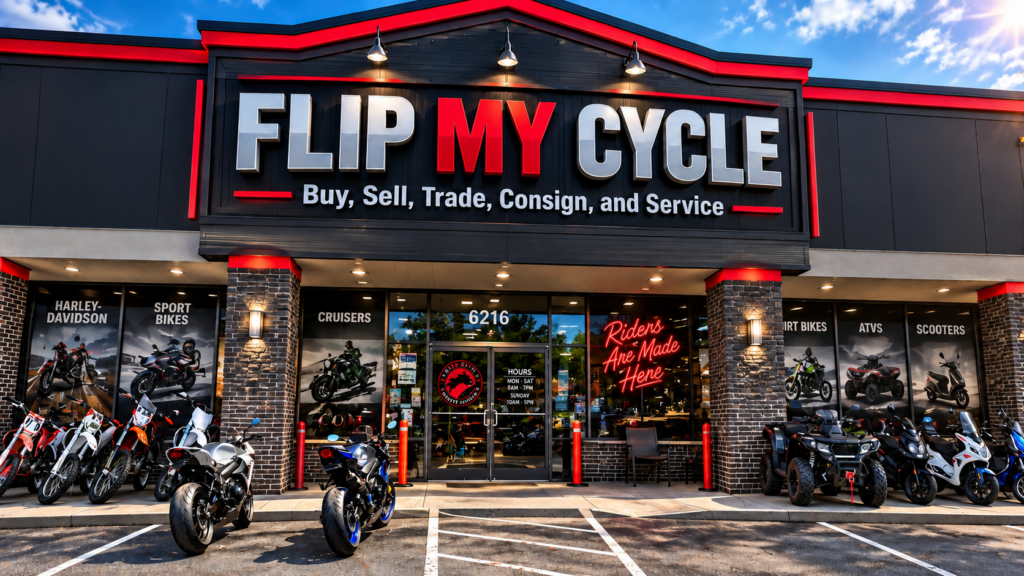
At Flip My Cycle in Fayetteville NC, we help riders explore their trade-in options and find their next motorcycle. If you’re wondering how to get a fair offer for your current bike, these 10 tips will help you prepare before your appraisal.
Riders from Fort Bragg, Hope Mills, Spring Lake, Raeford, Rockfish, Sanford, Southern Pines, Pinehurst, Lumberton, and surrounding North Carolina communities can use this guide to better understand the motorcycle trade-in process.
Table of Contents
- What Determines Motorcycle Trade-In Value?
- Research Your Motorcycle Trade-In Value Before Visiting
- Clean Your Motorcycle Before the Appraisal
- Gather Your Title, Keys, and Service Records
- Handle Simple Maintenance Before Trading
- Be Honest About Your Motorcycle’s Condition
- Understand How Modifications Affect Value
- Compare Trade-In Value With Private-Sale Value
- Check Your Motorcycle Loan Payoff
- Review the Complete Trade-In Deal
- Can You Trade In a Motorcycle With a Loan?
- Motorcycle Trade-In Value in Fayetteville NC
- Why Trade Your Motorcycle at Flip My Cycle?
- Get Your Motorcycle Ready for an Appraisal
1. What Determines Motorcycle Trade-In Value?
Your motorcycle trade-in value depends on several factors, and the original purchase price is only part of the story.
A dealership generally considers the motorcycle’s year, make, model, mileage, mechanical condition, cosmetic condition, service history, title status, modifications, and current market demand.
Two motorcycles with the same model year can receive different offers.
For example, a well-maintained motorcycle with healthy tires, working electronics, clean bodywork, and documented service may require less preparation for resale than a similar motorcycle with neglected maintenance or mechanical issues.
Demand also matters. Some models attract a wider range of buyers, while others appeal to a more specialized market.
A fair appraisal considers the motorcycle as it sits—not just what a similar bike is advertised for online.
2. Research Your Motorcycle Trade-In Value Before Visiting
One of the smartest ways to prepare for a trade-in is to research comparable motorcycles.
Look for bikes with the same year, make, model, trim, and similar mileage. Pay attention to condition and factory equipment, too.
You can use the J.D. Power motorcycle values guide as a starting point. Comparing current listings for similar motorcycles can also help you understand the market.
Remember that an advertised retail price is different from a trade-in offer.
A dealership may need to inspect, service, repair, detail, advertise, and store a motorcycle before it sells. Those costs and the risk of holding inventory affect the amount a dealership can offer.
Online research helps you set realistic expectations, but an appraisal is needed to evaluate your motorcycle’s actual condition.
3. Clean Your Motorcycle Before the Appraisal
A clean motorcycle makes a better first impression and allows an appraiser to see its condition more clearly.
Before bringing your bike to Flip My Cycle, give it a careful wash and remove accumulated road grime.
Clean the bodywork, wheels, windshield, and accessible surfaces. Empty your saddlebags, tour pack, or under-seat storage so you don’t leave personal items behind.
You don’t need to pay for an expensive detail, and cleaning won’t erase scratches or mechanical problems.
The goal is simple: present your motorcycle in a condition that makes it easy to inspect.
A little preparation can make the appraisal process smoother.
4. Gather Your Title, Keys, and Service Records
Paperwork can help support your motorcycle’s history and keep the trade-in process moving.
Bring your title if you have it, or your lender information if the motorcycle is financed. Gather your registration, available service records, spare keys, owner’s manual, and any original parts that came with the bike.
Maintenance receipts can be especially useful.
Oil changes, tire replacements, brake service, battery replacement, and other documented work help show how the motorcycle has been maintained.
If you’re unsure which documents are required for your situation, contact the dealership before your visit.
5. Handle Simple Maintenance Before Trading
Small maintenance issues can affect a motorcycle appraisal.
Before your appointment, check the basics. Make sure the tires are properly inflated, the lights work, the battery is healthy, and the motorcycle starts and runs normally.
If your bike uses a chain, check its condition and adjustment.
However, don’t assume every repair will increase your motorcycle trade-in value by more than the repair costs.
For example, replacing worn tires or repairing cosmetic damage may cost more than the resulting increase in your offer.
If your motorcycle needs expensive work, consider getting an appraisal before paying for repairs. That gives you information to compare the cost of fixing the bike with trading it in its current condition.
6. Be Honest About Your Motorcycle’s Condition
An accurate appraisal starts with accurate information.
If your motorcycle has been dropped, involved in an accident, repainted, or repaired, explain what happened.
Disclose known mechanical problems, warning lights, or electrical issues.
A dealership will inspect the motorcycle, and undisclosed problems can change the appraisal once they’re discovered.
Being upfront helps both sides understand the bike’s condition and makes it easier to discuss a fair offer.
7. Understand How Modifications Affect Value
Custom exhaust systems, handlebars, seats, lighting, luggage, and performance upgrades can make a motorcycle feel uniquely yours.
But the amount you spend on accessories doesn’t automatically become additional trade-in value.
Some modifications appeal to buyers. Others may narrow the motorcycle’s resale market or require the dealership to return certain components to their original configuration.
If you have factory parts that were removed during customization, bring them or tell the appraiser they’re available.
Keep receipts for major modifications and performance work when possible.
A clear record of what’s been changed helps the dealership understand the motorcycle it’s evaluating.
8. Compare Trade-In Value With Private-Sale Value
Motorcycle trade-in value and private-sale value are different because the transactions involve different responsibilities.
When you sell privately, you handle advertising, messages, appointments, negotiations, payment arrangements, and paperwork.
You may be able to ask more for the motorcycle, but you also take on the time and effort needed to find a buyer.
With a trade-in, the dealership takes ownership of the motorcycle and handles the work involved in preparing it for resale.
When comparing the two options, consider the offer, the time involved, any costs you may incur, and the convenience of completing your trade and purchase in one transaction.
9. Check Your Motorcycle Loan Payoff
You can often trade in a motorcycle even if you’re still making payments.
The important numbers are your trade-in offer and your lender’s verified payoff amount.
For example, if your motorcycle receives an $8,000 trade-in offer and your loan payoff is $5,500, you have $2,500 in positive equity before any applicable fees or transaction adjustments.
If the offer is $8,000 but the payoff is $9,500, you have $1,500 in negative equity.
Negative equity must be addressed as part of the transaction. Depending on your circumstances and lender requirements, you may need to pay the difference or explore whether it can be included in a new financing arrangement.
The Consumer Financial Protection Bureau’s auto loan resources explain loan terms and negative equity. Although the guidance focuses on auto loans, those financing concepts are also useful when reviewing a motorcycle trade.
10. Review the Complete Trade-In Deal
A higher trade-in allowance doesn’t automatically mean a lower overall purchase cost.
When you’re trading toward another motorcycle, review the full transaction.
Look at the selling price of the next bike, your trade-in allowance, loan payoff, taxes and fees, down payment, and financing terms.
Ask for a clear breakdown so you can understand how each number affects the amount you’ll pay.
A fair motorcycle trade-in deal is about the complete transaction—not just the trade-in number.
Can You Trade In a Motorcycle With a Loan?
Yes. A motorcycle with an outstanding loan can often be traded in.
The dealership will need to confirm the payoff amount and determine how it fits into your transaction.
If the motorcycle is worth more than you owe, the positive equity may be available to apply toward your next purchase.
If you owe more than the motorcycle is worth, the negative equity will need to be addressed.
Your options depend on your lender, credit qualifications, and the terms of the proposed purchase.
Before signing, make sure you understand the payoff, the amount financed, and your new payment obligations.
Motorcycle Trade-In Value in Fayetteville NC
If you’re researching motorcycle trade-in value in Fayetteville NC, remember that local demand can affect an appraisal.
A Harley-Davidson touring motorcycle, a Yamaha sportbike, a Kawasaki Ninja, and a smaller beginner-friendly motorcycle may appeal to different buyers.
Condition, mileage, equipment, and current market interest all contribute to the offer.
At Flip My Cycle, we serve riders from Fayetteville, Fort Bragg, Hope Mills, Spring Lake, Raeford, Rockfish, Sanford, Southern Pines, Pinehurst, Lumberton, Wade, Stedman, Eastover, and surrounding communities.
Whether you’re moving from a sportbike to a cruiser, upgrading to a touring motorcycle, or looking for something completely different, understanding your current bike’s value is the place to start.
Why Trade Your Motorcycle at Flip My Cycle?
At Flip My Cycle, we know your riding needs can change.
Maybe you’re ready to move up from your first motorcycle. Maybe you want more comfort for longer trips. Or maybe you’ve found a completely different bike that makes you want to ride.
As a veteran-owned dealership in Fayetteville NC, we help riders explore their options and understand the trade-in process.
Bring your motorcycle, share its maintenance history, and tell us what you’re looking for next.
You can also explore our motorcycle inventory at Flip My Cycle before your visit.
Get Your Motorcycle Ready for an Appraisal
Getting a fair motorcycle trade-in value starts before you arrive at the dealership.
Research comparable motorcycles. Clean your bike. Gather your records and keys. Check your loan payoff. Be honest about its condition, and review the entire deal before making a decision.
If you’re ready to trade your motorcycle in Fayetteville, Fort Bragg, Hope Mills, Spring Lake, Raeford, or the surrounding North Carolina area, visit Flip My Cycle to explore your options.
Whether you’re trading a Harley-Davidson, Kawasaki, Suzuki, Yamaha, Honda, Indian, Ducati, BMW, or another motorcycle, knowing your current bike’s value can help you take the next step.
Your next ride starts with understanding what your current one is worth.