Selling your motorcycle privately usually gets you a higher price. Selling to a dealer gets you paid faster, with far less risk and almost no work on your end. If you have time and your bike is in demand, a private sale can pay off. If you need the bike gone quickly or you’re buying another one, a dealer sale or trade-in usually comes out ahead once you count what a private sale really costs.
The rest of this guide covers how each option works and what North Carolina requires when you sell, so you can pick the route that fits your bike.
What is the difference between selling a motorcycle privately and selling to a dealer?
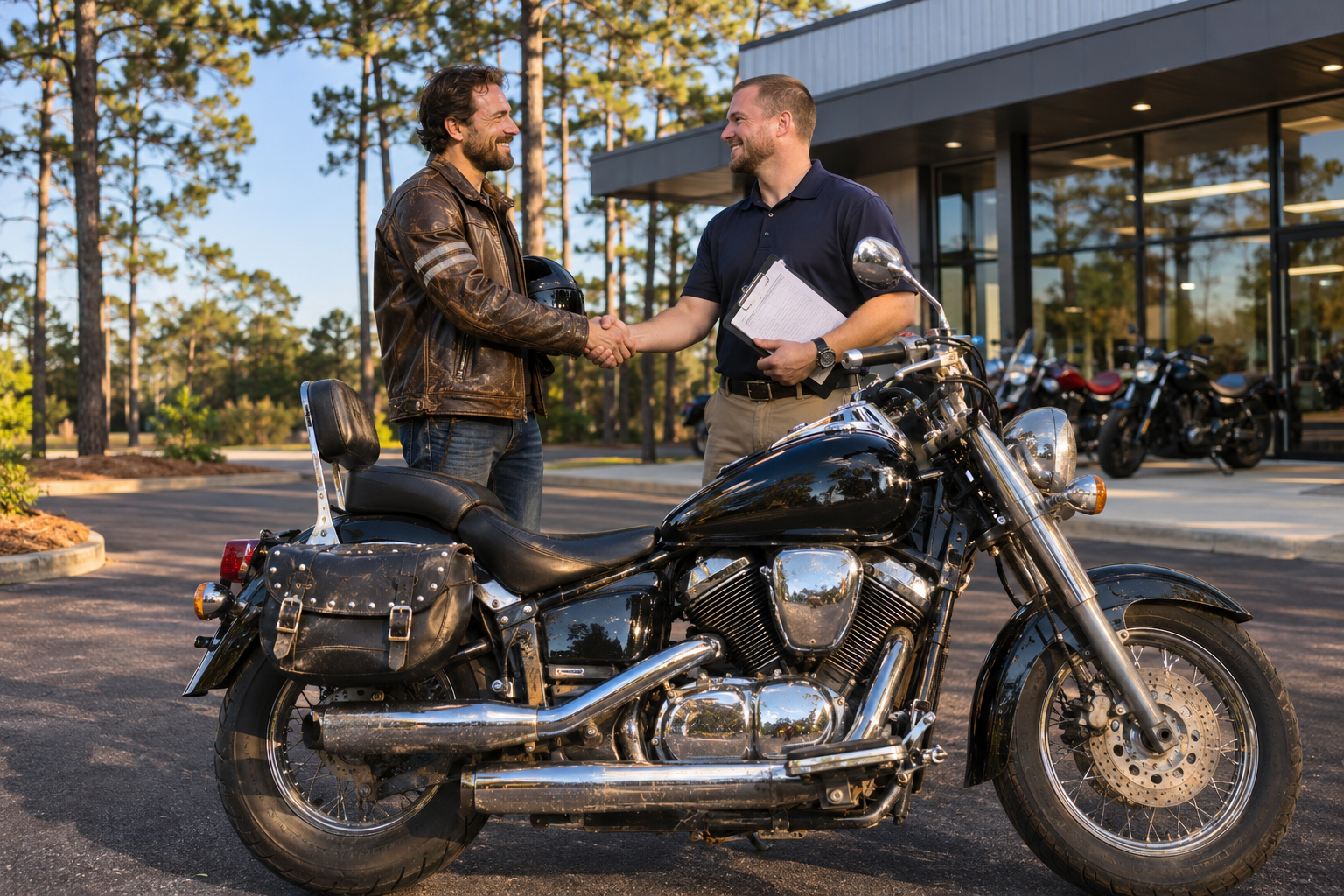
In a private sale, you sell straight to another rider and handle the pricing, listing, showings, payment, and title work yourself. In a dealer sale, the dealership appraises the bike, makes you an offer, and takes care of the paperwork. You either get paid on the spot or apply the value toward another bike as a trade-in.
The price gap comes from who does the work. A dealer’s offer is based on what the bike will bring after the shop inspects it, services it, details it, and holds it on the floor until it sells. That cost and risk come out of your offer. A private buyer takes on that risk themselves, so they’ll usually pay closer to retail.
A simple way to think about it: a private sale pays you for your time and effort. A dealer sale pays you for the bike and takes the effort off your plate.
How much more do you make selling a motorcycle privately?
Usually some, but often less than sellers expect. Listing prices are asking prices, and private buyers almost always negotiate once they see the bike in person.
The private number also has costs attached that never show up in the listing:
- Fixes a buyer will ask for, like a worn tire, a weak battery, or a bent lever from an old tip-over
- Weeks of insurance and storage while the bike sits
- Your time answering messages, meeting buyers, and waiting on no-shows
- A trip to a notary to sign the title, which North Carolina requires
- Extra steps with your lender if the bike still has a loan on it
Here’s a made-up example to show the math. Say a dealer offers you $7,000 for a bike you plan to list at $8,500. A buyer shows up, points out the rear tire is near the wear bars, and talks you down to $7,900. You spent two weekends on calls and meetups and paid another month of insurance. Your real gain over the dealer offer is a lot smaller than the $1,500 you started with, and you carried all the risk along the way.
If the bike is popular and paid off, and you aren’t in a hurry, a private sale can still be worth the effort. If that doesn’t describe your situation, get a dealer offer before you list.
What are the pros and cons of selling a motorcycle privately?
Selling privately gives you the best shot at top dollar, but you take on every job and every risk in the sale.
Pros of a private sale:
- You can ask a price closer to retail value.
- You set the price and decide who you sell to.
- A customized or hard-to-find bike may attract a buyer who cares about the upgrades more than a dealer would.
Cons of a private sale:
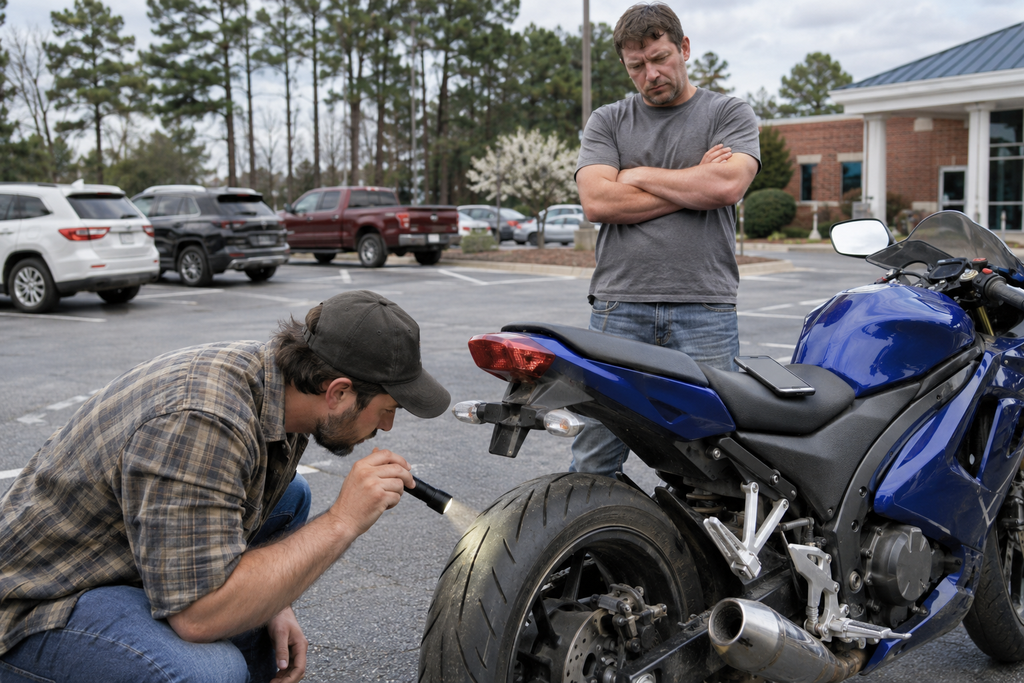
- Listings draw lowball offers and scam messages, and plenty of buyers never show up.
- You have to decide whether to hand your keys to a stranger for a test ride.
- Payment fraud is common, from fake cashier’s checks to payment app reversals.
- A bike with a loan is harder to sell because your lender holds the title.
- North Carolina requires a notarized title signature, so you have to coordinate a notary visit with the buyer.
What are the pros and cons of selling a motorcycle to a dealer?
Selling to a dealer trades some of the price for speed and certainty. For many riders, that’s a fair trade.
Pros of a dealer sale:
- One visit can replace weeks of listings and messages.
- You’re paid by an established business, not a stranger.
- If you still owe on the bike, the dealer can pay off your lender as part of the deal.
- If you trade toward another bike, North Carolina only taxes the difference (more on that below).
Cons of a dealer sale:
- The offer will be lower than the best possible private price.
- Offers can vary from dealer to dealer, so one appraisal may not tell you the whole story.
What does North Carolina require when you sell a motorcycle yourself?
North Carolina requires the seller’s signature on the title to be notarized, and the license plate stays with you, not the bike. Those two rules catch more first-time private sellers than anything else.
Here’s what to handle before the buyer rides away:
- Sign the title in front of a notary. Many banks and license plate agencies have one on staff. Never sign the title ahead of time or hand over a signed title before your payment has cleared.
- Take your plate off the bike. In North Carolina, plates belong to the owner. You can move the plate to another vehicle you own or turn it in to the NCDMV.
- Keep your insurance active until the plate is turned in or transferred. Canceling coverage on a registered plate can trigger insurance lapse penalties.
- Write up a bill of sale. North Carolina doesn’t require one for a private sale, but a signed bill of sale with the date, price, VIN, and both names gives you a record of exactly when the bike stopped being yours.
- Know what the buyer owes. The buyer has 28 days to title the bike and pays the state’s 3% highway use tax at that time.
When you sell to a dealer, the title transfer and any loan payoff are handled as part of the transaction, so most of this list goes away.
Does trading in a motorcycle save you money on taxes in North Carolina?
Yes. North Carolina charges a one-time 3% highway use tax when a vehicle is titled, and when you buy from a dealer, your trade-in allowance comes off the taxable amount.
Here’s how that plays out. Say you buy a $12,000 motorcycle from a dealer and trade in your current bike for $5,000. The tax is figured on $7,000, which comes to $210. Without the trade, the tax on the full $12,000 would be $360. You keep the $150 difference, and the savings grow as your trade value goes up. Any dealer document or admin fee is added to the taxable amount, so check your final buyer’s order for the exact figure.
The tax break only applies when your bike goes toward a purchase from that dealer. If you sell privately and then buy from a dealer, you pay the tax on the full price of the new bike. Subtract that from whatever extra you expect a private sale to bring. Our guide to motorcycle trade-in value explains how dealers arrive at their number.
Which option is best for your situation?
Your timeline and your next move decide most of this. Use these as a starting point.
Sell privately if:
- Your bike is paid off and in high demand, like a clean late-model cruiser or a popular sport bike.
- You have a few weeks to spare and you’re comfortable meeting buyers.
Sell to a dealer for cash if:
- You need the money soon or want the bike gone this week.
- You still owe money on it and want the payoff handled for you.
- The bike needs work you don’t want to do yourself or explain to buyer after buyer.
Trade in if:
- You’re buying another motorcycle anyway.
- You want the highway use tax savings and one transaction instead of two.
Want to know what a fair offer looks like? Our article on how to get a fair trade-in value for your motorcycle walks through what appraisers check.
What mistakes should you avoid when selling a motorcycle?
The most expensive mistakes happen on the private side, and most of them come down to paperwork and payment.
- Pricing from asking prices. Online listings tell you what sellers hope to get. Look at bikes that actually sold, and get at least one dealer offer as your floor.
- Handing over the keys with nothing in your hand. Many private sellers follow a simple rule: full payment before anyone rides. If you allow a test ride, hold the buyer’s ID and car keys, and confirm they have a motorcycle endorsement on their license.
- Accepting payment you can’t verify. Fake cashier’s checks are a common scam. Call the issuing bank using a number you look up yourself, or close the deal inside the buyer’s bank.
- Leaving your plate on the bike. Any tolls or tickets tied to that plate come back to you.
- Skipping basic prep. A dirty bike with a dry chain and old oil gets lower offers from everyone. Our guides on motorcycle oil changes and motorcycle chain maintenance cover the basics, or our shop can handle a motorcycle wash and detail before you list or trade.
- Not knowing your loan payoff. If you still owe on the bike, get a payoff statement from your lender before you talk price with anyone.
How do you get the best offer when you sell to a dealer?
Show up with your paperwork, a clean bike, and a clear idea of what you want from the deal.
Bring these with you:
- Your title, or your lender’s information if there’s a lien
- A valid photo ID that matches the name on the title
- Service records, including receipts for tires, oil changes, and major repairs
- Both keys, plus any original parts you kept after installing aftermarket ones
- Your payoff amount, if you still owe on the bike
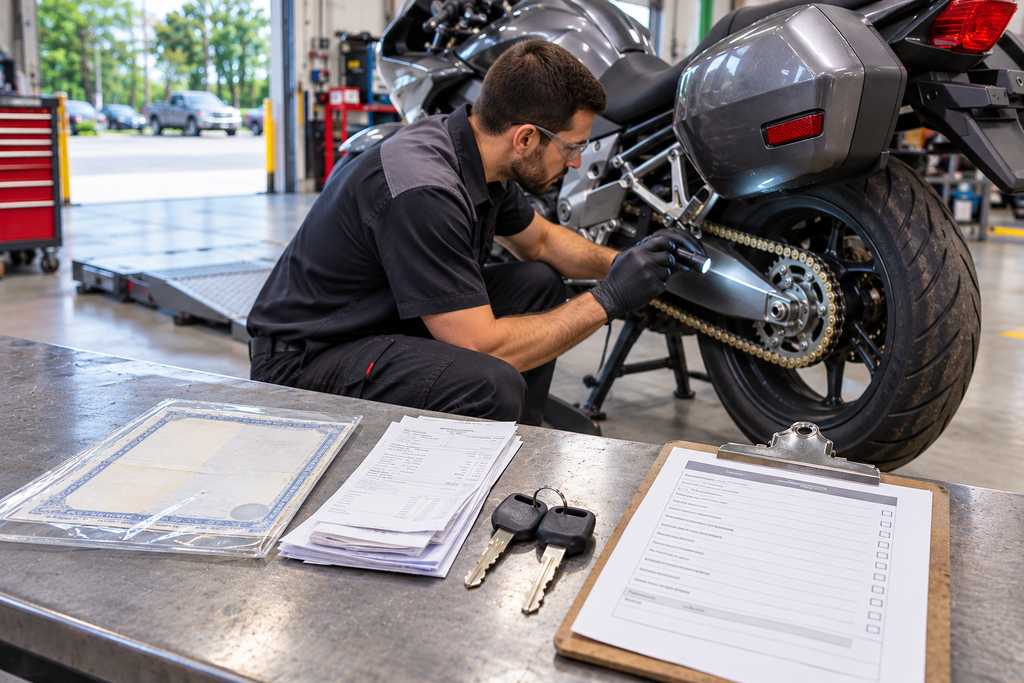
Our checklist of what you need to trade in a motorcycle goes into more detail.
A few more things move the number. Fix small, cheap problems like a burnt-out bulb or a cracked mirror, since they make the whole bike look neglected. Ask for both a cash offer and a trade-in figure so you can compare them. If you’re trading, judge the deal by the price of the bike you’re buying minus your trade, not by the trade number alone.
How can Flip My Cycle help you sell or trade your motorcycle?
Flip My Cycle is a veteran-owned motorcycle dealership at 6216 Yadkin Rd in Fayetteville, NC. We buy motorcycles outright, take trade-ins, and sell quality used motorcycles in Fayetteville from brands like Harley-Davidson, Kawasaki, Suzuki, and Yamaha.
The fastest way to start is our Value Your Trade form. Enter your bike’s year, make, model, VIN, mileage, and any added accessories, and our team will follow up. If you’d rather sell for cash than trade, our post on where to sell your motorcycle for cash in Fayetteville explains the in-person appraisal process.
Trading up? Browse our pre-owned motorcycle inventory and fill out a motorcycle financing application to see where you stand before you visit. If your bike needs attention before you sell it, our service department handles oil changes, tune-ups, tire work, and pre-season inspections.
Riders from Hope Mills, Spring Lake, Raeford, and the rest of the Fayetteville area can bring their bike to our Yadkin Road showroom for an in-person appraisal.
Frequently asked questions
Do dealers pay less than private buyers for motorcycles?
Yes, in most cases. A dealer has to inspect, service, and resell the bike, and it carries the risk while the bike sits on the floor, so its offer reflects that cost. A private buyer may pay more, but you take on the listing, negotiating, payment risk, and title work yourself. Once you count those costs and the tax savings on a trade-in, the gap is often smaller than it looks.
Can I sell a motorcycle I still owe money on?
Yes, but it takes extra steps. Your lender holds the title until the loan is paid off. In a private sale, you and the buyer usually have to work with the lender to pay off the balance and release the title before ownership can transfer. A dealer can pay off the lender directly as part of the sale and apply any remaining equity to your payment or trade.
Does a motorcycle title need to be notarized in North Carolina?
Yes. North Carolina requires the seller’s signature on the title assignment to be notarized. You and the buyer will need to meet at a notary, and many banks and license plate agencies offer that service. Don’t sign the title ahead of time. When you sell to a dealer, the dealership handles the title transfer paperwork as part of the deal.
Do I keep my license plate when I sell my motorcycle in NC?
Yes. In North Carolina, plates stay with the owner, not the vehicle. Remove your plate before the buyer leaves, then either transfer it to another vehicle you own or turn it in to the NCDMV. Keep your liability insurance active until the plate is surrendered or transferred so you don’t run into lapse penalties.
Is it safe to let a buyer test ride my motorcycle?
It carries real risk. A buyer could crash the bike or ride off with it. Many sellers require full payment before any test ride. If you do allow one, confirm the buyer has a motorcycle endorsement, hold their ID and car keys, and meet somewhere public with cameras. Selling to a dealer removes this problem completely.
Will a dealer buy my motorcycle if I’m not buying one from them?
Many dealers will, though not all. Flip My Cycle buys motorcycles outright in Fayetteville, so you can sell for cash without buying another bike. Bring your title, photo ID, keys, and any service records for an in-person appraisal. If you do plan to buy, trading in instead of selling for cash lowers the highway use tax on your next bike.
What paperwork do I need to sell my motorcycle to a dealer?
Bring your title, or your lender’s contact and payoff information if there’s a loan. You’ll also need a valid photo ID that matches the name on the title. Service records, both keys, and any original parts you removed can help your offer. If two people are listed on the title, ask the dealer whether both need to be present to sign.
Final takeaway
A private sale can get you more money for a popular, paid-off bike if you have the time and patience to deal with buyers and paperwork. For riders who want a quick, safe sale, or who are buying their next bike anyway, selling or trading to a dealer is usually the better call, especially with North Carolina’s trade-in tax break.
Ready to see what your bike is worth? Request your trade value online, contact the Flip My Cycle team, or call sales at (910) 779-0737. You can also stop by 6216 Yadkin Rd in Fayetteville, Monday through Friday from 9 a.m. to 7 p.m., Saturday from 9 a.m. to 5 p.m., or Sunday from 12 p.m. to 5 p.m.